

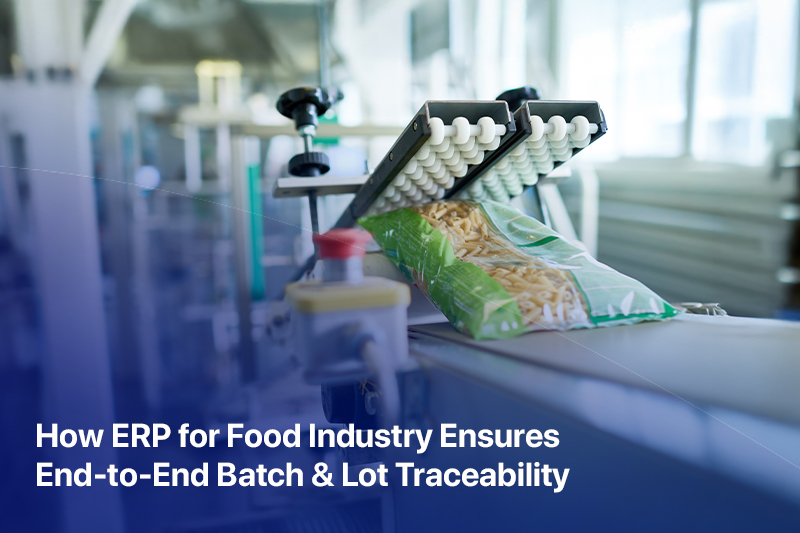
How ERP for Food Industry Ensures End-to-End Batch & Lot Traceability
Food safety isn’t just a checkbox anymore—it’s a core part of running a food business. People care more than ever about what they eat, rules keep getting tighter, and supply chains stretch across the globe. That means food companies have to stay sharp, keeping every step of production and distribution crystal clear.
That’s where ERP systems for the food industry is required. These tools really matter. From the moment raw materials arrive to the finished products go out the door, batch and lot traceability runs the show. One missing piece of data can get expensive recalls, get you in trouble with regulators, or wreck your brand’s reputation for good.
So, let’s talk about how ERP gives you complete control over batch and lot tracking. We’ll also dig into why spreadsheets and faulty systems just can’t keep up, and show how SAP Business One sets modern food businesses up with a framework that’s built for scale and ready for audits.
Why Batch & Lot Traceability Is Critical in the Food Industry
Batch and lot traceability refers to the ability to track every ingredient, process, and movement associated with a specific batch of food products — both forward and backward in the supply chain. Food manufacturers and distributors must answer questions like:- Where did this ingredient come from?
- Which batches used it?
- Where were those finished products shipped?
- Who are the affected customers if a recall is required?
- Protect consumer health
- Enable fast recalls
- Ensure accountability
- Maintain food safety standards
The Limitations of Manual Traceability Systems
Many food businesses still rely on:- Excel sheets
- Paper-based logs
- Isolated inventory systems
- Standalone accounting software
- Human error in data entry
- No real-time visibility
- Slow recall response
- Inconsistent batch records
- Limited audit readiness
What “End-to-End Traceability” Really Means
True end-to-end traceability covers the entire product lifecycle, including:- Raw material sourcing
- Goods receipt and quality checks
- Production and processing
- Batch splitting or merging
- Storage and inventory movement
- Distribution and delivery
- Customer-level traceability
How SAP Business One Enables Batch & Lot Traceability
-
Batch & Lot Management at Goods Receipt
- Assign batch or lot numbers at goods receipt
- Record supplier details, expiry dates, and quality parameters
- Link batches directly to purchase documents
-
Production-Level Traceability
- Batch-controlled Bill of Materials (BOMs)
- Recording of ingredient consumption by batch
- Tracking of batch splits and merges
- Linking finished goods batches to raw material batches
-
Inventory Movement Tracking
- Every inventory movement is logged by batch
- FIFO / FEFO rules are enforced
- Expiry-based stock management is automated
-
Forward & Backward Traceability in Seconds
- Trace finished goods back to raw materials (backward traceability)
- Identify all customers who received a specific batch (forward traceability)
- Quality complaints
- Regulatory inspections
- Product recalls
Recall Management: From Crisis to Control
Product recalls are one of the biggest risks in the food industry. Without ERP:- Identifying affected products takes too long
- Over-recalling leads to unnecessary losses
- Under-recalling risks compliance violations
- Isolate affected batches immediately
- Identify exact quantities and customers
- Minimise recall scope and cost
- Generate audit-ready recall reports
Compliance & Audit Readiness
Food businesses operate under regulations such as:- FSSAI (India)
- HACCP
- ISO 22000
- FDA (for exports)
- Maintaining complete audit trails
- Recording who performed each transaction
- Enforcing approval workflows
- Securing traceability data
Supplier & Vendor Traceability
Traceability is not limited to internal operations. SAP Business One allows food companies to:- Track supplier performance by batch
- Identify recurring quality issues
- Block non-compliant vendors
- Maintain supplier-wise compliance records
Customer-Level Traceability
Modern food distribution requires knowing exactly where products end up. With ERP for food industry, businesses can:- Link batches to sales invoices
- Track deliveries by customer and region
- Support distributor and retailer traceability
Data Integrity & Real-Time Visibility
Traceability data is only valuable if it’s accurate. SAP Business One ensures:- Single source of truth
- No duplicate or conflicting batch records
- Real-time updates across departments
- Controlled user access
Why SAP Business One Is Ideal for Growing Food Businesses
While enterprise ERP systems can be complex and costly, SAP Business One for food industry is designed specifically for small and mid-sized food manufacturers and distributors. Key advantages:- Built-in batch & lot management
- Scalable architecture
- Lower total cost of ownership
- Industry-specific extensions
- Faster implementation timelines
Industry Use Cases
SAP Business One is widely used in:- Food manufacturing
- FMCG
- Beverage production
- Dairy processing
- Meat & seafood processing
- Packaged food distribution
FAQs: ERP for Food Industry & Traceability
-
What is batch & lot traceability in food ERP?
-
Why is ERP important for food traceability?
-
Can SAP Business One handle expiry-based inventory?
-
Is SAP Business One suitable for food manufacturers?
-
How fast can traceability reports be generated?
-
Does ERP help during food safety audits?
Final Thoughts: Traceability Is a Competitive Advantage
In today’s food industry, traceability is no longer optional — it’s a defining factor of trust, compliance, and operational excellence. An advanced ERP for food industry does more than track batches. It:- Protects your brand
- Reduces financial risk
- Improves compliance confidence
- Strengthens customer trust










 Applicable for Package
 Optional